
Embarking on your financial journey can feel like navigating a complex maze, especially when it comes to managing your money effectively. One of the biggest challenges for many is simply knowing where to start. How much should you save? How much is too much to spend on non-essentials? That's where the 50/30/20 budget rule comes in — a straightforward, beginner-friendly framework designed to simplify your financial planning and put you on the path to financial health.
This article will break down the 50/30/20 rule piece by piece, offering practical examples and actionable advice to help you implement this powerful budget method into your own life. You'll learn the crucial distinction between needs vs wants and discover how dedicating specific percentages of your income can transform your savings and spending habits.
What is the 50/30/20 Budget Rule?
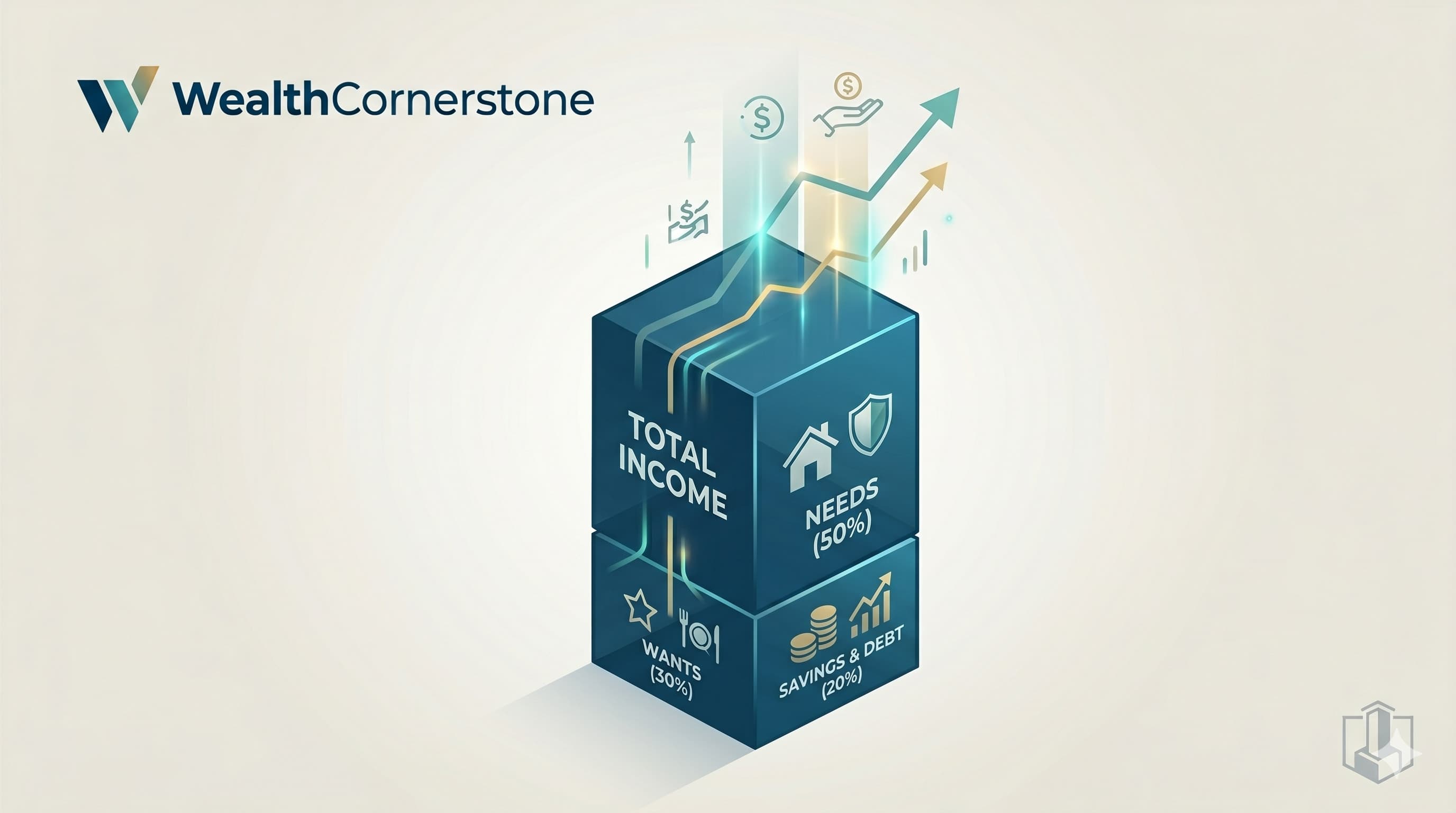
The 50/30/20 rule is a popular budgeting guideline that suggests dividing your after-tax income into three main spending categories: 50% for Needs, 30% for Wants, and 20% for Savings & Debt Repayment. This simple allocation makes it easier to manage your money without getting bogged down in intricate spreadsheets or restrictive daily tracking.
Originating from Senator Elizabeth Warren and her daughter Amelia Warren Tyagi's book, "All Your Worth: The Ultimate Lifetime Money Plan," this budget method is lauded for its flexibility and ease of understanding, making it an excellent starting point for anyone looking to gain control over their finances.
Let's break down each component:
- 50% for Needs: This portion of your income covers essential expenses that you absolutely cannot live without.
- 30% for Wants: This category is for all the discretionary spending that improves your quality of life but isn't strictly necessary.
- 20% for Savings & Debt Repayment: This crucial segment is dedicated to building your financial future and reducing outstanding debts.
Decoding Your "Needs" (50%)
The "Needs" category is the foundation of your budget. These are the expenses vital for your survival and basic functioning. If you cut these out, your quality of life, safety, or ability to work would be significantly compromised.
Here are common examples of what falls into your 50% "Needs":
- Housing: Rent or mortgage payments.
- Utilities: Electricity, water, gas, and basic internet access.
- Groceries: Essential food items to feed yourself and your family.
- Transportation: Car payments, gas, public transit fares, or essential vehicle maintenance to get to work.
- Healthcare: Health insurance premiums, essential prescriptions, and medical co-pays.
- Minimum Loan Payments: The absolute minimum payment required for student loans, car loans, or other debts (excluding extra payments).
- Essential Insurance: Car insurance, homeowners/renters insurance.
Real-world scenario: If your after-tax income is \$4,000 per month, then \$2,000 (50%) should ideally cover all these essential expenses. If you find your needs consistently exceeding 50%, it's a clear signal to examine your fixed costs. Perhaps you need to consider a more affordable living situation, re-evaluate transportation choices, or explore ways to reduce utility consumption. The goal here is to keep these expenses as low as possible to free up money for other categories.
Defining Your "Wants" (30%)
The "Wants" category is where your personality and lifestyle choices shine through. These are the expenses that enhance your life but aren't strictly necessary for survival. The key distinction in needs vs wants is that you could live without your wants, even if it might be less enjoyable.
Here's what typically falls under your 30% "Wants":
- Dining Out: Restaurant meals, takeout, and coffee shop visits.
- Entertainment: Streaming services, movie tickets, concerts, gaming.
- Hobbies: Gym memberships, classes, specialized equipment.
- Travel: Vacations, weekend getaways.
- Shopping: New clothes beyond basic necessities, gadgets, home décor.
- Subscriptions: Non-essential apps, premium content, beauty boxes.
- Discretionary Services: Manicures, massages, expensive hair treatments.
Real-world scenario: Using our \$4,000 monthly income example, you'd allocate \$1,200 (30%) to your wants. This category offers the most flexibility. If you're struggling to meet your savings goals or find your needs are creeping up, your "wants" are often the first place to look for cuts. Enjoying a daily latte might feel like a need, but financially, it's a choice. This isn't about deprivation, but about conscious spending and aligning your money with your values.
Prioritizing "Savings & Debt Repayment" (20%)
This 20% allocation is arguably the most critical for your long-term financial planning. It's dedicated to building your wealth, securing your future, and reducing financial burdens. This category focuses on putting your money to work for you.
Here are common components of your 20% for Savings & Debt Repayment:
- Emergency Fund: Building up 3-6 months' worth of living expenses in an easily accessible savings account is paramount. This protects you from unexpected job loss, medical emergencies, or large home repairs.
- Retirement Contributions: Investing in accounts like a 401(k) (especially if there's an employer match), Traditional IRA, or Roth IRA. The earlier you start, the more compound interest works in your favor.
- High-Interest Debt Repayment: Paying more than the minimum on credit card debt, personal loans, or other high-interest obligations. This saves you money on interest in the long run.
- Investment Accounts: Contributing to a brokerage account for long-term growth beyond retirement.
- Specific Savings Goals: Saving for a down payment on a house, a child's education, or a significant purchase.
Real-world scenario: With a \$4,000 monthly income, you'd allocate \$800 (20%) here. For someone just starting, prioritizing an emergency fund and tackling high-interest debt would likely come first. Once those are established, focus can shift to maximizing retirement contributions and other investments. This dedicated percentage ensures you're consistently making progress towards your financial independence.
How to Implement the 50/30/20 Rule: A Step-by-Step Guide
Implementing the 50/30/20 rule is simpler than you might think. Here’s a practical guide to get started with this effective budget method:
- Calculate Your After-Tax Income: This is your net income – the amount of money you actually receive in your bank account after taxes, insurance premiums, and retirement contributions (if pre-tax) are deducted.
Example:* If your gross monthly salary is \$5,000 and \$1,000 is withheld for taxes and benefits, your after-tax income is \$4,000.
- Determine Your Allocation Amounts: Apply the 50/30/20 percentages to your after-tax income.
Example:* For \$4,000 after-tax income:
* Needs (50%): \$2,000
* Wants (30%): \$1,200
* Savings & Debt Repayment (20%): \$800
- Track and Categorize Your Spending: For at least one month, meticulously track every dollar you spend. Assign each expense to one of the three categories: Needs, Wants, or Savings & Debt Repayment. You can use a spreadsheet, a simple notebook, or a budgeting app (like Mint, YNAB, or Personal Capital) for this. This step is crucial for understanding where your money truly goes.
- Adjust Your Spending: Compare your actual spending to your 50/30/20 targets.
* If your Needs exceed 50%: Look for ways to cut back on essential expenses (e.g., lower rent, cheaper car, reducing utility usage).
* If your Wants exceed 30%: This is often the easiest place to make cuts (e.g., eat out less, cancel unused subscriptions, reduce impulse buys).
* If you're not hitting 20% for Savings & Debt Repayment: Re-evaluate your Wants first, then consider if there are any areas in your Needs that can be trimmed.
- Automate Your Savings: Set up automatic transfers from your checking account to your savings and investment accounts on payday. This "pay yourself first" strategy ensures you meet your 20% goal before you have a chance to spend it.
Common Pitfalls and How to Avoid Them
While the 50/30/20 rule is simple, missteps can derail your progress. Here are some common challenges and how to overcome them for successful financial planning:
- Mistaking Wants for Needs: This is perhaps the most frequent error. A gym membership is a want, even if you value your health. High-speed internet for gaming is a want, even if basic internet for work is a need. Be honest with yourself about what is truly essential. Revisit the needs vs wants definitions regularly.
- Inconsistent Tracking: Starting strong but losing momentum is common. Make tracking a habit, perhaps by reviewing your spending weekly or using an app that automates much of the process. Consistency is key to a successful budget.
- Getting Discouraged by Initial Imbalances: It’s rare to fit perfectly into the 50/30/20 percentages from day one. Don't let an initial imbalance deter you. View it as a diagnostic tool that shows you where to focus your efforts. It's a journey of gradual adjustment, not instant perfection.
- Not Adjusting Over Time: Your income, expenses, and financial goals will change. Review your budget every few months or whenever a significant life event occurs (new job, moving, marriage, baby). What worked last year might not work today.
- Ignoring Smaller Expenses: The "latte factor" is real. Small, recurring expenses can quickly add up and blow your "Wants" category without you realizing it. Be mindful of every purchase, no matter how small.
Conclusion
The 50/30/20 budget rule offers an elegant and practical framework for anyone looking to gain control over their personal finances. By clearly distinguishing between your needs vs wants and dedicating a solid portion to savings and debt repayment, you're not just managing your money – you're building a foundation for a secure and prosperous future.
It's more than just a budget; it's a guiding principle that helps you make informed spending decisions and prioritize your financial well-being. Start today by calculating your income, categorizing your expenses, and making the necessary adjustments. Consistency and honesty with yourself are your greatest allies on this path. Embrace the simplicity of the 50/30/20 rule, and take a significant step towards achieving your long-term financial planning goals.
Frequently Asked Questions
Does the 50/30/20 rule work if I live in a high cost-of-living city like New York or San Francisco?
Not without adjustment. In cities where rent alone can consume 40–50% of take-home pay, the 50% needs target becomes unrealistic. The framework still has value — it tells you clearly that your needs are consuming too much of your income, which is actionable information. The practical fix is to compress the wants category (toward 15–20%) and protect the 20% savings rate rather than cutting savings to make needs fit the rule. Some planners use a 60/20/20 split for high cost-of-living situations.
How do I apply the 50/30/20 rule with irregular or freelance income?
Base the calculation on your lowest-earning month over the past year, not your average. This builds in a natural buffer. In high-income months, route the surplus directly to savings or debt before spending it on wants — this prevents lifestyle inflation from absorbing windfall months. A separate "income smoothing" account, where you deposit all revenue and pay yourself a fixed monthly salary, makes the rule much easier to apply with variable income.
Should minimum debt payments go in the Needs category or the 20% savings bucket?
Minimum required payments on debt belong in the Needs category — they are non-negotiable obligations. Extra debt payments beyond the minimum belong in the 20% category alongside savings and investing. This distinction matters: it prevents people from feeling like they are "spending" their savings bucket, and it makes the trade-off between accelerating debt payoff versus building savings explicit rather than hidden.
Further Reading
- How to Create a Zero-Based Budget That Actually Works — take the next step with a budget method that assigns every dollar a specific job.
- How to Budget When Your Income Is Irregular — adapt the 50/30/20 framework for freelance or variable income.
- What Is a Sinking Fund and Why You Need One — use sinking funds inside your wants and savings buckets to prevent budget surprises.
- How to Set SMART Financial Goals — pair your budget with clear, measurable goals to stay motivated.